Pages

Showing posts with label Ceramics. Show all posts

Wednesday, 21 October 2015

Pottery and the colour Blue


Royal Blue

The History of Blue and White Pottery

Blue is one of the colours of the rainbow and it has become associated with many things over time. Perhaps the connections with the sky and the seas are the most strong. However it also been used to denote cold, loyalty, truth and conservatism. In past eras the blue coloured pigments for clothing were scarce and expensive leading to the colour being related to wealth and royalty eg Royal Blue. It is a colour that is not available as a natural ceramic pigment but needs cobalt ore to be refined to produce the highly intense blue colour. In the early days the ore was roasted and then further melted with a a glass to produce the early pigments of Zaffre and Smalt.

The origins of blue colour in pottery are a little confusing.
Ming Vase
The Egyptians are known to have been making blue coloured pottery since before 400AD but it was the Chinese cobalt blue and white pottery from the the Tang Dynasty onwards that led to a huge interest in blue and white in Western Europe. The introduction of tea to England escalated the interest in pottery tea sets especially blue and white.

Cobalt has been the source of pigments for English blue and white pottery since the eighteen century and these were the pigments used to make the famous Spode patterns of Willow and Indian tree. Since that time blue and white has never disappeared from our lives.

Blue and white in the 21st Century

Now old designs such as Burleigh compete with more contemporary blue patterns in our High St. Denby Imperial blue has stood the test of time being unique in colour, texture and appearance. Similarly, the English style of Burleigh ware created by the unique hand made tissue printing technique continues to attract buyers from around the world. New patterns like Blue Hydrangea from hand made producer Peregrine pottery continue to gain interest from those looking to buy English style with a modern look.


Blue Hydrangea from Peregrine Pottery
Burleigh ware
Denby Imperial Blue

The Pigments

Although modern blue ceramic pigments started with Zaffre and Smalt, their development has continued and modern day pigments provide high intensity with the ability to meet specific colour tones or firing temperatures. Whilst the use of the basic cobalt oxide in glazes is still common for craft or studio glazes looking for a low cost, the use of cobalt silicates and cobalt aluminate pigments has flourished. They extend the inter-mixable nature in glaze or coloured decoration and often provide improved dispersion characteristics. Some examples of the colour tones available using the different pigment types can be seen in the table below.
(NB Web colours are never an exact match for ceramic tones)


Colour name
Colour pigment
Colour shade
Matte Blue
Cobalt aluminate

Mazarine Blue
Cobalt Silicate

Royal Blue
Cobalt zinc silicate

Willow Blue
Special

Azure
Cobalt alumino-silicate

Flow Blue
Na-Ca-Cobalt silicate


Where next for Blue and White?

Whatever your interest blue continues to feature in pottery decoration across the world. I predict this fashion is unlikely to change soon. I would love to hear whether you agree and your thoughts on blue and white and why its appeal continues so strongly?

More information and other technical articles on pottery and ceramics can be found at my website The Potters Friend.

Go now to sign up for my free newsletter.

Friday, 10 July 2015

Top ten tips on pottery firing

Pottery making provides some challenges for the beginner but non more so than at the firing stage. No-one wants to lose their precious ware after making it so lovingly. It is quite usual for small studio and craft potters to use intermittent box type kilns to fire their ware. Whether you use gas or electric as the energy source the principle is the same; heating an enclosed space containing shelves of pottery. Whilst the science of firing is quite complex and often outside the knowledge of many hobby potters most know it is important to follow some basic rules. The following tips are aimed at giving you the best performance from your kiln whatever the type.

1. Temperature uniformity is key to achieving consistent results. This should be the aim when firing your kiln.
2. Measure the performance of your kiln using bullers rings or Orton cones. Control it using an electronic temperature controller.
3. Record firing cycles used and settings for each firing as well as Bullers Ring or Orton Cone values.
4. Measure and record the gas or electricity used in KWH for each firing. The trends in this often give you a pre-warning of catastrophic failure.
5. Regularly calibrate thermocouples as they deteriorate over time.
6. Inspect refractory brick or lining regularly to ensure large cracks are not present. Remember large cracks in brickwork will affect kiln temperature uniformity.
7. Inspect electric elements regularly as over time they become brittle and may distort or break.
8. For gas users the colour of the flame is a guide to the kiln atmosphere. Yellow flame is reducing while blue flame is oxidising.
9. Placing ware affects the firing performance of the kiln. Large or thick walled pieces require more heat and act as a heat sink.
10. Don't be greedy- firing pottery too fast can lead to all manner of faults. Unless the glaze and body are designed to be fast fired don't do it!

More information and other technical articles on pottery and ceramics can be found at my website The Potters Friend.

Go now to sign up for my free newsletter.

Tuesday, 14 April 2015

Should I make my own Pottery Glazes?

Coloured glazes used by Tinkling toadstools
This question has caused a lot of debate among potters. It is a similar question to "should I make my own bread, cakes or pastry?" Clearly there is no right and wrong answer. People who bake their own bread and cakes do so for numerous reasons. Whether it is to reduce costs or make it fresh or make it taste better; all are valid reasons. However most do it because they like it and the self satisfaction it gives them to create something of value.

 Similarly, the potter will often claim that making glazes gives him the same type of satisfaction, is cheaper and gives him more scope for creativity! But lets look at the issues involved in making glazes in detail to see if his claims are true:-

 Costs

Glaze materials
There is little debate that buying the glaze materials to make the glaze can reduce costs significantly. Common materials such as clays, felspars, silica, frits and pigments are all readily available from a number of suppliers. However, often they are not in the ideal form to produce a glaze without additional processing. Most need at least a number of processing steps to make a satisfactory glaze. These steps include, preparing a recipe, grinding or mixing with water, sieving, magneting, testing, and controlling the glaze slip consistency using additives. The time and knowledge to correctly process and test the glaze are mostly overlooked when cost comparisons are made. For those with time to learn about glaze materials and the process this is not an issue. However for many hobbyists who are time poor it clearly does not make sense economically.They are better using reliable commercial glazes.

Creativity

Unique copper ruby glaze
Without doubt making your own glazes is a creative exercise. Again using the same cake making analogy as before, you have complete control of the make up of the glaze and how it will look after firing. Just like cake recipes there are thousands of recipes for glazes each giving its unique colour, texture and appearance depending on how its fired. This uniqueness is what many studio potters strive for.  By varying the pigments and make up of the glaze in theory you can innovate to your hearts desire! Therefore creativity can surely be improved by making your own glazes!

Technical restrictions

In practice, however,  there is considerable science behind making acceptable glazes:
  • The glaze needs to technically match the body or the glaze may just peel off like old paint. 
  • There is a limit to the range of compositions that can be made- for example some recipes will just never make glossy glazes.
  • The firing cycle and atmosphere have as great an affect on the glaze appearance as the recipe.
The fired glaze surface of functional tableware needs to pass the requirements of legislation e.g. toxic metal release into foodstuffs.

So if you want to be creative with glazes you also need to have some technical knowledge. Potters without a scientific background may struggle to understand these technical parameters and hence making glazes could ultimately become more trouble than its worth.

Health and Safety

Unleaded Glaze
In recent years this issue has grown in importance for potters making their own glazes. Lead, for example, is being phased out in commercial glazes and its use and safety has been severely questioned especially in the USA. Other materials such as Barium compounds need to be used within strict guidelines for safe use. Even pigments such as cobalt and nickel oxide have been questioned over their safety. Clearly there is a lot to learn technically to comply with health and safety during the making of glazes. These issues are understood by commercial glaze manufacturers who can provide up to date data sheets on the glazes they manufacture and supply.

Equally important is an understanding of the legislation that applies to the fired product to meet the demands of the end market. Functional tableware has to meet much more legislation than ornamental ware in the various countries around the world.

Summary

In summary making your own glazes safely and successfully is much more difficult than at first appreciated. Technical and health and safety issues are not easy to overcome. However for a potter or hobbyist with a scientific understanding he can indeed be more creative and lower some material costs by making his own glazes. For the uninitiated it will be a long road of trial and error and frustrations. For those determined to try I recommend you do some reading and preparation online or in the wealth of books available before you begin. 

Good Luck and Happy Potting
The Potters Friend

More information and other technical articles on pottery and ceramics can be found at my website The Potters Friend.

Go now to sign up for my free newsletter.

Sunday, 21 December 2014

Why do I need frit in my glaze?

A glaze after firing can be considered to be a glass. Therefore it is not surprising that traditional glass making materials such as quartz, limestone, and felspar are commonly used to make glazes. However glazes which are intended for firing below 1150C need other elements such as lead or boron and alkalis to create the right properties. To enable these elements to be included safely they are often pre-melted with other glass making materials to form a FRIT.

What is a frit?


Borosilicate frit
Lead frit
China clay


A frit is a a pre-melted glass which is granular in nature. Once crushed and ground to a fine powder it provides the basis for all low firing glazes. Often a glaze contains merely one frit and clay. The clay is added as a suspending and binding agent to aid glaze storage, application and firing.

How many frits are there?

There are literally thousands of frits. The compositions have been researched and developed over a long time period to provide the right technical properties such as fusibility, thermal expansion and durability. A wide range of properties are needed to meet the wide range of bodies and firing cycles used by manufacturers and craft potters.In general terms frits are normally classified as transparent or opaque and then lead containing or lead free.For environmental/safety reasons lead containing frits are gradually being phased out and replaced with lead free alkali borosilicates.

Can I make my own frits?

It is possible but not recommended. Large scale frit manufacturers often make frit by a continuous method in a high temperature box type kiln using specialist refractory linings. These kilns produce tonnes of frit per day, meaning they can achieve consistent high quality output. For other than the most demanding glaze requirement, making your own frits is unlikely to be cost effective.

How many types of frit do I need?

This depends on the number of clay bodies and firing cycles you employ. As a basic requirement you need a transparent frit, an opaque frit and an expansion modifier frit. These should allow you to make transparent, opaque and semi opaque glazes suitable for conversion to coloured glazes by adding colouring pigments.

Why not use frits in all glazes?

In theory this is possible but the costs would be excessive. For example high temperature stoneware and porcelain glazes can be manufactured with lower cost glass making materials such as felspars, quartz, limestone and clays.

Where can I buy frits

Most pottery material distributors sell small quantities of powdered frit suitable for the studio or craft potter. Industrial scale potters may buy the frit direct from manufacturers such as Endeka, Ferro or Esmalglas.

Happy Potting
The Potters Friend

More information and other technical articles on pottery and ceramics can be found at my website The Potters Friend.      Go now to sign up for my free newsletter.

Monday, 17 November 2014

Opacification of Glazes

Glaze opacifiers are materials which when added to a glaze change the level of transparency of the glaze. Glazes are often described as clear/transparent or opaque. In order to achieve color tone and hide the body color it is often necessary to add opacifier particles which stay discrete in the glaze after firing. Materials which have a significant difference in refractive index from the parent glaze produce the most effective opacification. To the right you can see the effect of adding an opacifier to a transparent glaze. It becomes whiter and milky (opacified ) in nature and flows less.

Below you can see the effect of adding opacifier to a transparent glaze containing different colored pigments


Top = transparent glaze            Bottom = opaque glaze


Typical glaze opacifiers are zircon (zirconium silicate), tin oxide, and titania (titanium dioxide). 

Zircon opacifier powder

Zircon

Zircon is the preferred opacifier for glaze due to the low cost, inertness and stability in glaze. To achieve full opacification, the opacifier content and the particle size are important factors. For addition of zircon to the glaze mill during grinding a particle size of 95% less than 3 microns and a content of 5-10% ensures sufficient opacifier is dispersed to create optimum opacity.  

However an exceptional level of opacity can be achieved by pre-melting the zircon into a glass (called frit) and then using the frit as part of the glaze recipe. These frits are transparent before firing but crystallize zircon during the glaze firing process to give a high level of opacity. 

Tin Oxide

Tin oxide has historically been used as a glaze opacifier but its high cost has limited its recent use to low temperature majolica or special effect glazes. At a level of 5% in a transparent glaze a high level of opacity can be achieved. Its lower solubility in glaze compared to zircon means that lower levels of tin oxide can be used to create the same level of opacity as zircon.. Tin gives a slightly blue white tinge and also has a lesser effect on the glaze appearance than zircon which increases glaze viscosity during dissolution.One major drawback of tin is it reactivity with some oxide pigments. For example, with chrome oxide a pink discoloration may result from the formation of a chrome-tin spinel crystal.
Titania reactive glazes


Titania

Titania is also a very costly opacifier and is used primarily where reactive special effect glazes are required. Like zircon it has a higher solubility than tin in the glaze and even at levels of 4%  tends to give a yellow tinge to the glaze after firing. It readily reacts with other materials in the glaze to create many unusual crystalline phases on cooling.This is ideal for special effect glazes but undesirable for standard opaque glazes.


Happy Potting
The Potters Friend

More information and other technical articles on pottery and ceramics can be found at my website The Potters Friend.

Go now to sign up for my free newsletter.


Wednesday, 10 September 2014

The Wedgwood Collection and the changing face of UK pottery

Wedgwood Museum

Staffordshire pottery manufacture changed forever in the late 1980's and early 1990's. The power of the supermarket buyers, the draw of low cost manufacture overseas and the changing markets in Europe all contributed to the massive decline in pottery manufacture in the UK. So many big names like Royal Doulton, Spode, and Royal Worcester, to name but a few, now exist merely as brands with the factories closed and demolished. Bleak as it was for the thousands of workers who lost their jobs during that time, many of those workers still talk fondly of the friendships, skills and pride of working in the hundreds of potbanks which existed at that time in north Staffordshire and especially Stoke on Trent.

Staffordshire Oatcakes
It was not just  the potteries that demised but also the services to those factories, the engineers, the material suppliers and sandwich and oatcake shops that provided breakfast and lunch to the hungry workers at break times.For the lucky few they found work elsewhere and the humble Staffordshire Oatcake lives on mainly through online marketing and Social Media.

Many of those pottery workers now rely heavily on their work pensions created during their employment at companies like Wedgwood. However Wedgwood pension trust has a big pension deficit that is causing  problems.

Over the last few years the importance of this pension deficit has been highlighted as the struggle to keep the magnificent Wedgwood Collection at its home in the Wedgwood museum in Stoke on Trent continues.

For those who have not seen the collection I urge you to do so. You will not be disappointed. At over 80,000 historical pieces, ranging from early experiments for new bodies and glazes through to modern production as well as rare manuscripts and letters, pattern books, works of art and photographs, covering the 250-year Wedgwood history, it is one of the most unique industrial archives in the world. The importance of the collection is explained in more detail in this Wedgwood video link.

The collection is under threat because a legal loophole allowed a Wedgwood previously in liquidation to place pension debt in the Museum trust. The trustees have no option but to try to pay off this debt by selling some or all of the collection.

We cannot lose this collection from the UK or allow it to be dispersed around the world to private collectors. It is OUR heritage and I urge you to donate to help meet the £2.74m shortfall still required to keep the collection together in the UK.

Thank you for your support.

Monday, 4 August 2014

Pottery Glaze Safety

Introduction

The safety of pottery manufactured by credible large scale pottery manufacturers particularly in Europe and the USA is a priority. However many smaller scale studio potteries have a lesser understanding of the leaching of toxic components from glazes. Why? Because it is difficult to understand and even more difficult to test accurately without specialist equipment.

However everyone involved with pottery manufacture needs to understand about glaze toxicity in the 'sue everyone' culture of today.

Changes to legislation in the USA in the early 90's provided the springboard for worldwide change.
A case of lead poisoning in the USA caused by pottery which did not conform to any legislation worldwide (YES NON CONFORMING WORLDWIDE!) led to big changes. The result of the political intervention that followed was to effectively ban lead glazed ware (under proposition 65) in California and many other US states.Whether this was a justified scientific solution to the original problem is still debated by many in the industry. However the result is here to stay.

Lead in Glaze

Lets start with some facts about lead :
  • Lead in large quantities is known to be toxic. Indeed the ancient Egyptians used it for homicidal purposes.
     
  • Lead in small quantities is known to be harmful. It can seriously affect the learning ability of small children and cause other harmful effects in adults.
     
  • Lead glazed pottery leaches lead when subject to strong acids. However this may be as low as parts per billion; less than might be found in drinking water!
     
  • Lead leaching from the glaze surface is not directly related to the lead content of glaze. Many other factors such as firing have an equal or greater influence.
     
  • Lead glazed pottery has been in existence for thousands of years
Clearly the picture for lead glazes is not good. However the technical understanding gained over many years of industrial research and manufacture allowed them to be used with relative safety. Nonetheless the pottery industry has moved forward.

 Environmental as well as political pressures has ensured that millions of pounds have been spent to research and develop unleaded glazes and colours by major manufacturers. Unleaded glazes and colours have now become the norm and are available for most types of pottery body.

But unleaded glazes are not without issues. Lets consider why:

Unleaded Glaze

Unleaded glazes are mainly glass, sometimes with a crystalline phase and are considered as long-lasting and indestructible. This is not strictly true as all glass leaches to some extent when it comes into contact with acid foodstuffs even water. In the case of acids,  contact with the glaze surface over a period of time can cause a much greater leaching effect. The intermittent use of alkali dish-washing agents can also dull the glaze surface leaving it more prone to acid attack. Early unleaded glazes were particularly prone to this type of attack by strong dishwashing detergents.

Some unleaded glazes contain elements such as Barium, Zinc and Cadmium which are also considered toxic when released in large quantities from the surface of the glaze. Indeed some countries legislate for this by imposing limits on the release of cadmium and zinc elements and other heavy metals in their metal release legislation or guidelines. The safe handling of barium carbonate and cadmium compounds in the manufacture of glazes is also a concern for glaze producers.


Coloured Glazes

Copper green glaze
Coloured glazes have long been known to give greater problems than white glazes in terms of toxic metal release. This is due to the often overlooked fact that the choice of pigment greatly influences the ease at which acids can attack the glaze surface. For example it is well established that the combination of copper and lead in a glaze gives significantly greater lead leaching than from the lead glaze alone.

Other colouring elements such as cobalt, manganese can act in similar ways even in unleaded glaze. Therefore it is important to know the effect of pigments and intrinsic durability of each glaze you make.

Toxic Metal Testing

Toxic metal testing of pottery intended for food contact is carried out by specialist testing organisations who are accredited to carry out standard tests such as EU 2005/31/EC or ASTMC738 in the USA. The most recent European limits for this test is specified in 2005/31/EC. To reduce cost and avoid testing of clearly unacceptable glazes quick tests can be used to screen out poorly durable or lead glazes. Cutting a lemon in half and placing it overnight on the glaze surface is one such quick test. Another is using a quick lead test such as lead inspector.

However it is recommended that all glazes produced for food contact use are tested by certified test laboratories to ensure compliance.

Summary

To produce safe ceramics that comply with current legislation it is important to understand the formulation and firing of glazes. It is  more complex than most people think and testing by a recognised testing laboratory is the only true way to ensure compliance. The problems of safety of  lead glazes are well known, and these glazes are being phased out and replaced with unleaded equivalents. However unleaded and coloured glazes are not totally free of issues and reference to the health and safety glaze documents of suppliers is strongly recommended.


Happy Potting
The Potters Friend

More information and other technical articles on pottery and ceramics can be found at my website The Potters Friend.

Go now to sign up for my free newsletter.

Thursday, 19 June 2014

Pottery Materials-Potters You've Never Had it So Good!

Sources of materials

Materials dug from the ground have been the source of pottery making for thousands of years. However early potters relied heavily on local materials, especially the clays and sands. This was certainly the case in my beloved Staffordshire, England where local marl clays formed the major source of clay for early industrial potters.

Borax granules
Today materials are shipped around the world to areas of high industrial scale ceramic manufacture. For example the high quality white china clays from the south of England are often shipped to Asia to make the finest bone china and porcelain bodies. Similarly borax and boron minerals from Turkey and the USA are used in Europe to make glazes and frits for tile, tableware and sanitary ware manufacture.

However it is not just the source of available materials but also the quality and consistency that has helped modern potters and potteries to improve their quality, designs and efficiency.

Materials for body making

Body materials
The main materials used to produce a clay body are silica or quartz, felspar, and clays. These materials come in various purities, particle sizes, and qualities. To produce the finest white bodies, high purity low iron materials are used and these materials are sourced locally where available. However most areas of pottery manufacture do not have the required purity or consistency required from all their local suppliers and are therefore forced to consider other supplies. It is the consistency in purity, and control of of material properties that has made a significant difference to large scale pottery manufacturers. They can automate processes and improve efficiency to reduce costs. Materials are now stardardised to fit processing routes. For example 30 mesh and 200 mesh materials are common in the UK. These improvements in materials for industrial scale customers also has a knock on benefit for craft, hobby and studio potters who can also purchase these same materials from distributors and use them with greater confidence.

Materials for glaze making

Frit granules
Like body the main materials used for glaze making are silica, china clay, and felspar. However frits (fused glass fragments) and other minerals such as limestone, dolomite, wollastonite, zircon are often added to control the fired properties of the glaze. Expensive technical grade chemicals such as zinc oxide, barium carbonate,and boric acid are also used in small quantities in the glaze or frit to meet the most demanding glaze requirements. However it is in the use of boron products where industrial scale and craft scale differ the most. Large scale glaze manufacturers predominantly use frits as a source of boron, where craft glaze makers use boron products such as Gerstley borate. The benefits of using frits for industrial scale glaze manufacture are far reaching. The recipe of the glaze is designed to be lead free and often fine tuned to give the widest firing range and technical performance. Control of glaze slip properties, glaze application, and firing properties are of paramount importance especially in automated plants which are not suited to the use of borates in glaze. Slip control of the glaze involves controlling both the solids content of the slurry, the viscosity (fluidity) and the drying time by means of chemical additives.

This differentiation in supply is a benefit to craft and hobby potters who can choose a from a wide range of frits or borates depending on their scale of operation or cost needs. .

Materials for decoration

A whole range of  methods are now available for decoration of pottery. When colour was introduced to pottery in early years it was in the form of naturally occurring coloured minerals usually high in iron. Consequently the colour range was restricted to brown- red to grey blue in colour depending on the firing condition. However with the development of pigments from the eighteenth century many more colours became available with Chinese blue colour on white glaze becoming very popular.                                      
range of onglaze decorating colours


Today a full range of stable mixable ceramic colours are available ranging from bright yellow to blue to red. Together with a wider range of decorating techniques the modern potter now has the opportunity to design truly unique ware that is also repeatable.

Range of ceramic stains


To put this into perspective an anology might be to compare Fords "you can have it in any colour as long as its black" to the current range of colours and effects used to paint modern vehicles.

In a similar way to body and glaze materials, decorating colours such as onglaze have become standardised and more consistent in both their application and firing. Colours have been developed without lead and are available in the best medium (liquid) to allow optimum application whether that is hand painting, machine banding or screen printing. Introduction of digital printing has allowed digital images to be translated from computer to ware using ink jet decals or even direct printing in a similar fashion to paper printing. For the hand made purists in pottery computer support to design has not always been welcomed but it has extended the range of design to new levels.

In the future design will be pushed even further by 3D printing which is in its infancy in the pottery industry.

Summary

Clearly material technology and control in the pottery industry has progressed almost unnoticed since the early eighteenth century pottery manufacture. However it has progressed and the development of more consistent, environmentally friendly colours together with a wider colour palette has been of great benefit to modern potters, large and small..  The advent of digital printing in recent years and the potential of 3D printing is set to revolutionise the industry further creating even more design possibilities.

Yes Potters it is true! You've never had it so good!
Comments welcomed?

Happy Potting
The Potters Friend

More information and other technical articles on pottery and ceramics can be found at my website The Potters Friend.

Go now to sign up for my free newsletter.


Thursday, 13 March 2014

How to Choose Your Pottery Clay Body

What is clay?

Flat plates of clay particles
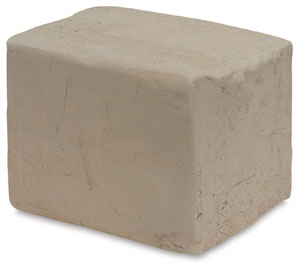
Before choosing your pottery clay body it is first important to understand a little about clay and why it is used as a component of a clay body. Clay is a mineral extracted from the ground which can be readily moulded like plasticine. At microscopic level, the particles of clay have a flat plate-like structure giving them this plastic like property. The 2 most commonly used pottery clays are Ball Clay and China Clay (Kaolin). Ball clay tends to be very plastic-mouldable but off white in colour. China clay is less plastic but has a whiter fired colour. Many other clays are available but they tend to be off white to red in colour and therefore less used in high volume white pottery manufacture.

What is a clay body?

The terms clay and body are used by potters almost interchangeably. However in most cases it is not technically correct! In simple terms a body is a formula containing clay and other minerals. Therefore clay is a raw material component of a body. In past times a body was simply a clay dug from the ground which was variable in both its composition and properties. However, modern commercial potters no longer rely on bodies manufactured from clay alone. To achieve specific properties they are scientifically formulated in a very precise way. A wide range of raw clays and minerals are used from all around the world. They vary in colour, strength, particle size as well as mineralogy and purity. No two clays from different parts of the world are precisely the same although for comparison purposes they can act in a similar way when used as part of a body formula. For studio pottery manufacture coarse minerals called grogs are often added to the clay body formulas to give additional texture appeal and improved properties.

How to choose the best clay for you


Firing range of your kiln


The maximum firing temperature of your kiln should be your first consideration when deciding which type of clay body to buy. It is no use choosing a stoneware clay firing 1250 C if your kiln will only fire to 1200 C. Lower temperature kilns are suitable for earthenware and terracotta bodies (less than 1200 C) whereas high temperature kilns are acceptable for most bodies including porcelain and stoneware.

Colour


The fired colour of the body will often dictate the cost. In general whiter clay bodies are more expensive than buff or cream coloured ones. The type of clay body you use is often prescribed by your colour selection. For example porcelain and bone china are always very white after firing.  To give you an idea of the fired colour produced by the different clay body types see the section entitled 'range of bodies'. Please also note that the firing temperature has a significant affect on the fired colour!

The making Process


The making process you intend to use to shape the body is also an important factor when considering the most appropriate clay body. Clay body sub-types allow you to select a clay suitable for all major forming operations including throwing, hand-building, sculpting, casting or machine making.

Size of your work and end use


The size of the pottery piece you plan to make is also important. Larger pieces often require a more heavily grogged (less plastic) clay whereas smaller pieces of work can require more plasticity. In addition, the end use of the ware, whether it is purely ornamental, for outside use, or designed as functional tableware will affect your choice of clay body.

Texture


For the more experienced potter the texture of the clay body after firing is often important.. The feel, look and strength of the ceramic piece is strongly affected by this sub-type of clay. For example the grogged subgroup of bodies generally add texture, strength and stability, whilst an ungrogged body will result in a smoother more polished finish.

Glaze compatibility


Whichever clay body you choose it is imperative that you select a glaze which is compatible with the body. This technical compatibility is critical to producing an intact piece without faults after firing. Be guided by your supplier who can supply compatible glazes for most body types and firing schedules. For peace of mind you should always test a sample of the glaze and clay body in your own kiln prior to any major production. The temperature and firing schedule of your kiln will influence whether your clay body and glaze are compatible after firing.

Range of Clay Bodies


The are numerous clay bodies produced commercially around the world available to the craft potter, studio potter and commercial pottery. Indeed there are so many that it is impossible to detail them all here. Bodies are often developed to make them suitable for the making process. Therefore suppliers often state  subtypes which define which clay bodies are more suitable for hand throwing, casting, hand building etc.

Clay bodies however can be classified into a relatively small number of categories according to their colour, firing range and texture. Below are a few major examples showing the fired colour of individual body types.

Porcelain
Bone China
Earthenware
Stoneware
Terracotta


Bone China


Bone China chocolate cup
Bone China
This is a smooth textured extremely white firing body that is also translucent. It is unique in that it contains a high proportion of calcined bone ash . Biscuit firing at approx 1220 C gives it a high strength making it suitable for producing delicate highly decorative items as well as tableware. This type of ware after glazing is often decorated with onglaze colours or precious metal decoration to create stunning pieces of pottery. Electric firing kilns usually produce the best bone china quality.

Porcelain


This is a smooth textured translucent extra white firing body similar to bone china. However two types of porcelain are made, a 'hard porcelain' which requires a glaze firing in excess of 1400 C and a 'soft porcelain' which requires a glaze firing to approx 1250 C. Biscuit firing however is often around 1000 C which allows pieces to be glazed more successfully. High temperature gas kilns are often used to fire this type of body. Porcelain, like bone china, can also be decorated with onglaze enamels and precious metal to create delicate highly attractive giftware as well as tableware.

Stoneware


Stoneware jar
Stoneware
This class of clay body is commonly used by craft and studio potters. It has a relatively high biscuit firing temperature in excess of 1150C.  Many commercial bodies, available in a range of off white to buff colours, are fired in the range 1250-1300C to give maximum strength. By glazing with a reactive type coloured glaze a wide variety of effects and colours can be achieved. Because of this stoneware has found high popularity with craft potters looking to create unique coloured or or textured hand made pottery. This body type can be used to produce both decorative and functional pieces such as tableware.

Terracotta


Terracotta
This class of body is typified by its unique red terracotta colour. This clay body has a high iron content in its mineral components giving the unique red colour. Like stoneware the smooth texture can be modified, by addition of grog (coarse material), to give a much rougher finish. Terracotta bodies have a relatively low firing temperature of 1000-1050C and are therefore porous and have relatively low strength after firing. Commonly unglazed it is often used for sculptures, planters, tiles and garden ware where the technical properties are not so demanding. For more demanding environments such as tableware the body is often glazed to give a stronger more durable product.

Earthenware


This type of body is often used for hand painting by hobbyists.
Burleigh Blue and white jug
For craft pottery this body is biscuit fired to approx 1000 C to allow easy brushing of underglaze colours or coloured glaze on to the porous surface. Following  glaze firing to 1050 C to 1150 C the body colour and underglaze colours show through the transparent glaze producing highly decorative ware.  After glaze firing the body remains porous with reduced strength compared to fully vitrified bodies like porcelain or bone china.

Body colour ranges from white to buff and some bodies are also grogged to provide texture.

For commercial tableware optimum body strength is achieved by firing the biscuit in the range 1180-1220 C but this peak is not often needed for lower strength or decorative only ware.

Special bodies

raku firing by Lori Duncan
This range of bodies include, highly coloured bodies, low firing bodies, Raku bodies, and special highly textured bodies. In the case of Raku the body is modified to allow rapid heating and cooling without  cracking, usually by the addition of grog. Making raku pottery successfully requires more expertise than other pottery types and often depends on a trial and error approach. To learn more about Raku read my separate article on Raku making.

Summary

Clearly, choosing the right clay body for you poses a number of technical questions. It is more difficult than is immediately obvious. However I recommend you talk to your clay body suppliers in the first instance and not just search the internet. Their vast knowledge of their products will make the whole process of selection of suitable body and glaze just that much easier.

Good Luck
Happy potting!
The Potters Friend


More information and other technical articles on pottery and ceramics can be found at my website The Potters Friend.

Go now to sign up for my free newsletter.

Wednesday, 2 October 2013

Starting out in Pottery? Read this first!

Making pottery is just like baking  a cake but more complex!


I can tell you one thing about pottery that is in-disputable. It is diverse and more complex than you could ever imagine. Think of it as being like baking a cake. There are literally thousands of different recipes and baking instructions, including the one your grannie used to make! Many of the cake recipes make great cakes but they are all slightly different.

 Clay bodies and glazes are just the same but even more complicated! This is what many potters find fascinating. They can develop their own clay body, glaze and process in a way that makes them special and their pottery products unique. Please remember that!

 However for the novice all this complexity creates confusion. Listening to more experienced potters providing a snippet of knowledge is not always good for you. Beginners try to relate it to their needs and often it results in failure.

 So here is what the beginner really needs to know and not forget.

Start with a pottery class


Start with a pottery class. Here you can learn the basics with the support of a tutor. You can meet new friends and even take comfort in that you are not alone in your struggles to learn a new skill! A good tutor will not only guide you but provide material recommendations to allow you to reach the next stage of working alone.

Choose a Quality Clay and Glaze supplier


Clay Body
If you must go it alone there are many suppliers out there who can help you make the right choice of initial materials. They have the experience and knowledge of a wide range of clay bodies and glazes.
Tell them what you want to make and how. For example. "I want to make pottery by using a potters wheel. I want to glaze it with a white glaze by dipping and I have a pottery kiln that has a maximum temperature of 1250C. "

They can then provide a clay and glaze that are compatible which when processed correctly will give you the best possibility of success.


Process the clay and glaze as recommended by the supplier 


Orton Cones
The making and firing process used to make the pottery is as important as the clay and glaze materials. Therefore process the clay and apply the glaze as recommended by the supplier. Fire the clay and glaze in the kiln as recommended by the supplier.  Firing is often controlled by a firing cycle input into an electronic controller and/or Orton cone values. For more information on firing read my detailed article how to properly fire your pottery.

Once you are happy with the finished result repeat it several times. This proves the process you have  used will work consistently as well as giving you confidence in your skills.

Make a note of the clay body, the glaze, the firing schedules and take a photo of the fired appearance. In this way you will always have a record of how to reproduce your great work of art!

Only once skilled add your own artistic flair


Making pottery is a combination of art and science. The art to design something unique and the science to make it into a product. Only when you have the basic pottery skills and can repeatedly create the same basic product should you become focused on artistic flair.

Developing  your own style and delight in making something unique


Lori Duncan Raku
Potters are often most satisfied when they have developed their unique style or products. Using baking as analogy, top bakers often specialise in making bread, cakes or pastries and have their one stand out dish. Likewise potters specialise in stoneware, raku or wood firing or other depending on their influences.

However they develop this over many years of making and studying pottery. 

So do not rush to specialise too early. What all master potters have in common is a strong basic knowledge of clay, glaze and firing.

Keep on learning and enjoy


Pottery making is meant to be enjoyable so make sure this happens. One way to do this is to continue to learn new things. In pottery making this is relatively easy as the subject is so diverse and changing that you never become a master of all.

Once adept at basic skills look at all elements of what you do not just the making technique. Using materials such as colour creatively can open a whole new spectrum of ware. For example if you only made plain glossy white, look at making some coloured glazed pieces.

One way to do this successfully is to enrol on a pottery course specialising on one type of technique. For example studio potters often run courses to help others develop their knowledge of raku or wood firing or sculpting etc. For more information see my list of pottery courses/classes available in the UK

Above all enjoy!

Good Luck
Happy Potting
The Potters Friend


Monday, 29 April 2013

How to Choose a Pottery Wheel

Buying a pottery wheel can be quite an expensive issue.
Whilst second hand wheels exist it is difficult to judge their state of repair and future reliability. Therefore make sure you make an informed choice.

So what factors should you consider when buying your pottery wheel?

Weight of clay


When choosing a pottery wheel the weight of clay you intend to throw decides the power of the motor you will need for a power driven wheel.

Typical weights are as follows:
  • ¼ HP for small pottery items 20lbs (10kgs approx) max for beginners
  • ½ HP for medium sized items up to 100lbs (25 kgs approx) max suitable for most commercial potters
  • 1 HP for large items 200lbs (50kgs approx) for experienced potters making very large items.

Quality and ease of operation


Quality of wheel can be an issue as it comes at a price. However you should also consider at least:

  • Noise-older type wheels can be quite noisy whilst some recent models are whisper quiet

  • Smoothness of pedal operation

  • Smoothness of wheel particularly at low speeds- a jerky transition of speed can cause difficulties -important for delicate shaping

  • Reversability-can it be used by left and right handed people?

  • Electric or kick-wheel operation? Foot pedal or hand lever operation? Whilst kick wheel models may be cheaper they can take some getting use to if you are already used to an electric powered
  • Wheel head size and predrilled holes- The wheel head size dictates the max diameter of clay piece which can be thrown. Holes in the wheelhead allow a bat (special disc) to be used. Pins allow release of the bat, holding the thrown piece, from the wheelhead. The thrown piece can then be removed easily for drying while a new piece is thrown.

Mobility


Some wheels are very light in weight and designed to be portable whilst others are meant to be static. Consider if you want to move the wheel between different locations. Heavy powerful wheels can be more durable and long lasting.
Examples of different wheel types are:

A Tabletop Wheel

Shimpo Aspire Pottery Wheel
The Shimpo Aspire can handle your most creative challenges. Its lightweight, compact design makes it easy to transport, and a 20 lb centering capacity makes it a practical addition to any studio or classroom. The Aspire features a 1/3 HP, 100W DC motor, a 7" alloy wheel head, and a removable one-piece splash pan. The wheels speed ranges from 0–230 rpm, controlled by a hand lever. Also included are two 9¾" bats. It measures 9" H × 14½" W × 20" L and weighs 25 lb . Amazing, affordable, accommodating … Aspire! Shimpo’s Aspire Pottery Wheel includes a two-year limited manufacturer’s warranty.  


A Powerful model suitable for seated use

    Brent Model B
Brent wheel Model B is designed to fill the needs of schools and studio potters. Competitively priced, this wheel is quiet and solid under 150 lb (68 kg) loads of clay. A 1/2 HP motor provides the power and weight necessary for school use. A splash pan and 12" Plasti-Bat are included. Shipping weight is 112 lb (51 kg). Truck shipment is required. 10-year limited warranty. CE-certified.


Super quiet model for seated use-The Shimpo's Whisper

    Shimpo RK-Whisper Potter's Wheel
Potter's Wheel is extremely responsive, with high torque at all speeds. It's powerful, and by far the quietest pottery wheel on the market. The ½ HP, brushless DC motor has a direct drive (no belt) system and a broad speed range for optimum control. A fixed foot pedal with hand lever operates the electronically controlled motor. The motor is reversible for lefthanded and righthanded users. The 12" wheelhead and two-piece splash pan are standard. Centers up to 100 lbs. The wheelhead also turns freely, so it can be used as a banding wheel at 0 rpm.

Warranty and Cost

Warranty and cost often go hand in hand. A warranty can be anything between 1 and 10 years and cost will be upward of $350 dollars for a new wheel. It is worth asking if it can be repaired locally within the warranty if anything goes wrong..